

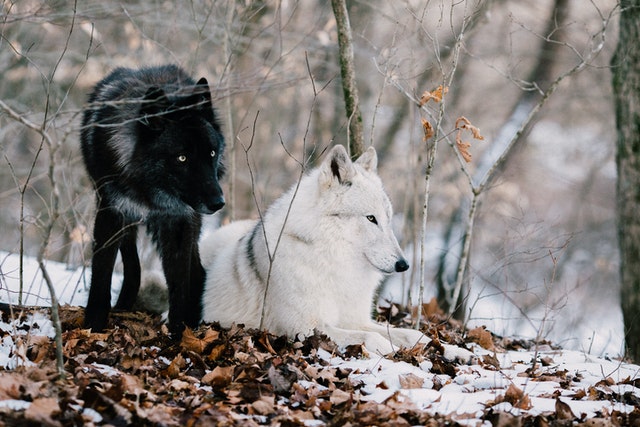
The genetic and archaeological evidence that suggests dogs began evolving from wolves somewhere between twelve and forty thousand years ago is very well known. People proposed that our ancestors adopted wolf puppies that became domestic dogs over time or that wolves and humans began to hunt together. But neither of these theories really makes sense.
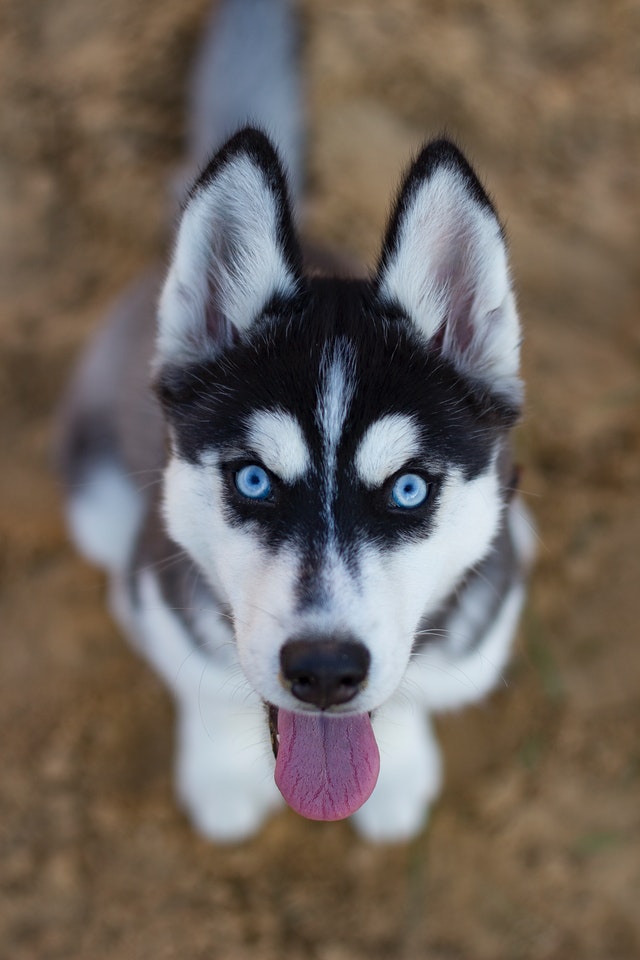
Wolves and humans never had a particularly amicable relationship, although there’s that overwhelmingly one-sided animosity. And that there’s no other animal portrayed so ubiquitously as the “Bad Guy” throughout history.
The Bible portrayed the wolf as a ravenous destroyer of innocence. In Icelandic mythology, two wolves swallowed the moon and the sun. The old German word for wolf, warg, also means ” murderer,” “strangler”, and an “evil spirit.” Those officially pronounced wargs were cast out from society and forced to live in the wilderness. Some think that this is where the myth of werewolves came from since the outcast was no longer considered to be human. As children, we grew up with Little Red Riding Hood and the Three Little Pigs, where wolves were cunning villains to be outsmarted and slain.
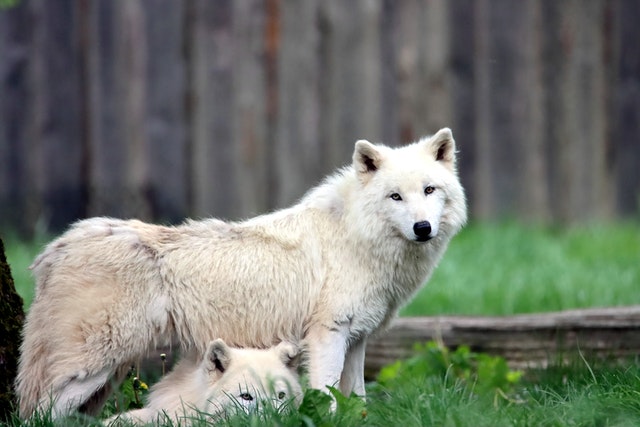
The revilement of wolves was not limited to myths and fables. Almost every human culture in the world that has come into contact with the wolves has persecuted them at one time or another, and these persecutions have often led to their local annihilation.
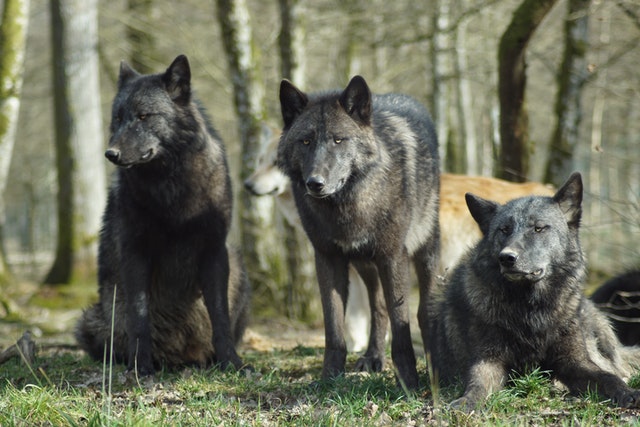
The first written record of wolf extermination was in the sixth century BC when lawmaker and poet Solon of Athens offered a bounty for every wolf killed. This was the beginning of a long, systematic massacre that turned the wolf from one of the most successful and widespread predators in the world to one listed by the International Union for Conservation of Nature (IUCN) as vulnerable to extinction in 1982.
The Japanese used to worship wolves and prayed to them to protect their crops from wild boars and deer. When Japan ended three centuries of self-imposed isolation from the rest of the world in 1868, Westerners arrived and advised the Japanese to poison all the wolves to protect their livestock. In 1905, three men brought a wolf carcass to sell to an American collector of exotic animals. The wolf had been killed while chasing deer near a log pile. The collector paid the men for the wolf, skinned it, and sent the pelt to London. This was the last wolf in Japan.
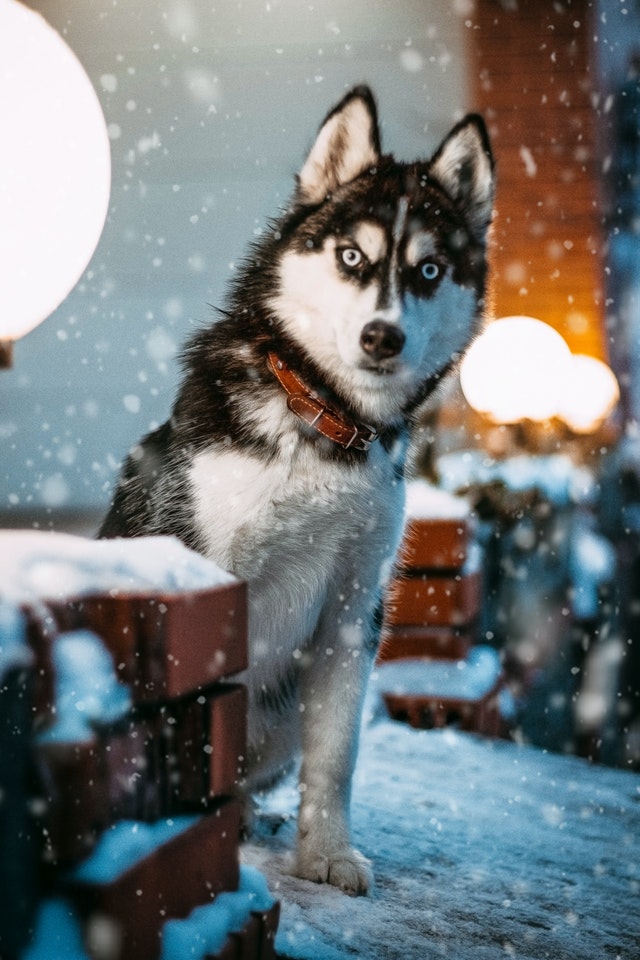
In England, the last wolf was killed in the sixteenth century under the order of Henry VII. In Scotland, the forested landscape made wolves more difficult to kill. In response, the Scots burned the forests. Emperor Charlemagne of France organized an order of knights called the louveterie. The last wolf in France was seen in 1934. The wolf was hunted from 80% of China and India, and Mongolia’s numbers have been dramatically reduced.
Wolves in the United States fared a little better. Wolves were revered and respected in some Native American tribes, but this reverence did not protect them from being hunted and trapped for fur. The first European settlers brought their prejudices, and the war on wolves was swift and thorough. Soon after the first livestock arrived in Virginia in1609, a bounty was put on wolves. Barely a century later, thanks to traps, strychnine poisoning, and the fur trade, wolves were gone from New England.
In 1915, the eradication of wolves became government business, and officials were appointed whose sole purpose was the elimination of wolves in the continental United States. They did their job well, there was not a wolf left in the forty-eight contiguous states of America.
Since then wolves, wolves have been reintroduced into Yellowstone National Park and Idaho, though residents in the surrounding communities have successfully lobbied to have them hunted since wolves occasionally kill livestock.
If this is a snapshot of our behavior toward wolves over the centuries, it presents a perplexing problem ~ how was this feared and hated creature tolerated by humans long enough to evolve into the domestic dog?
Domestication requires genetic change over many generations, and the early progenitors of dogs looked very much like wolves ~ the same animals humans have hunted and persecuted throughout the centuries. When did humans and wolves meet for the first time? And what happened to convince humans that an animal we traditionally feared and despised would make a good pet?
 G.I. Takara Kennel Blog